
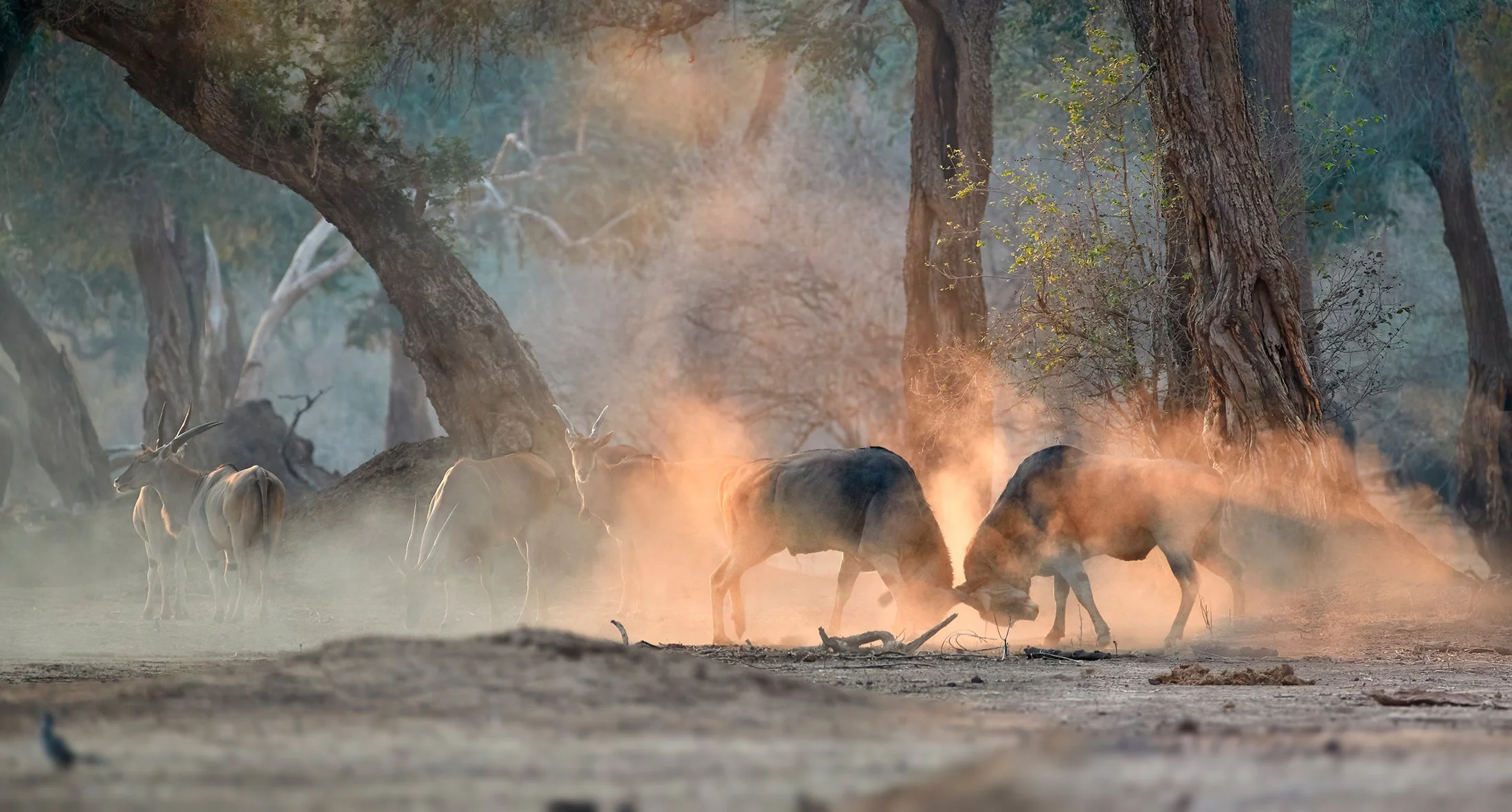
Guided Safaris in
Mana Pools
Floodplains and deep wilderness
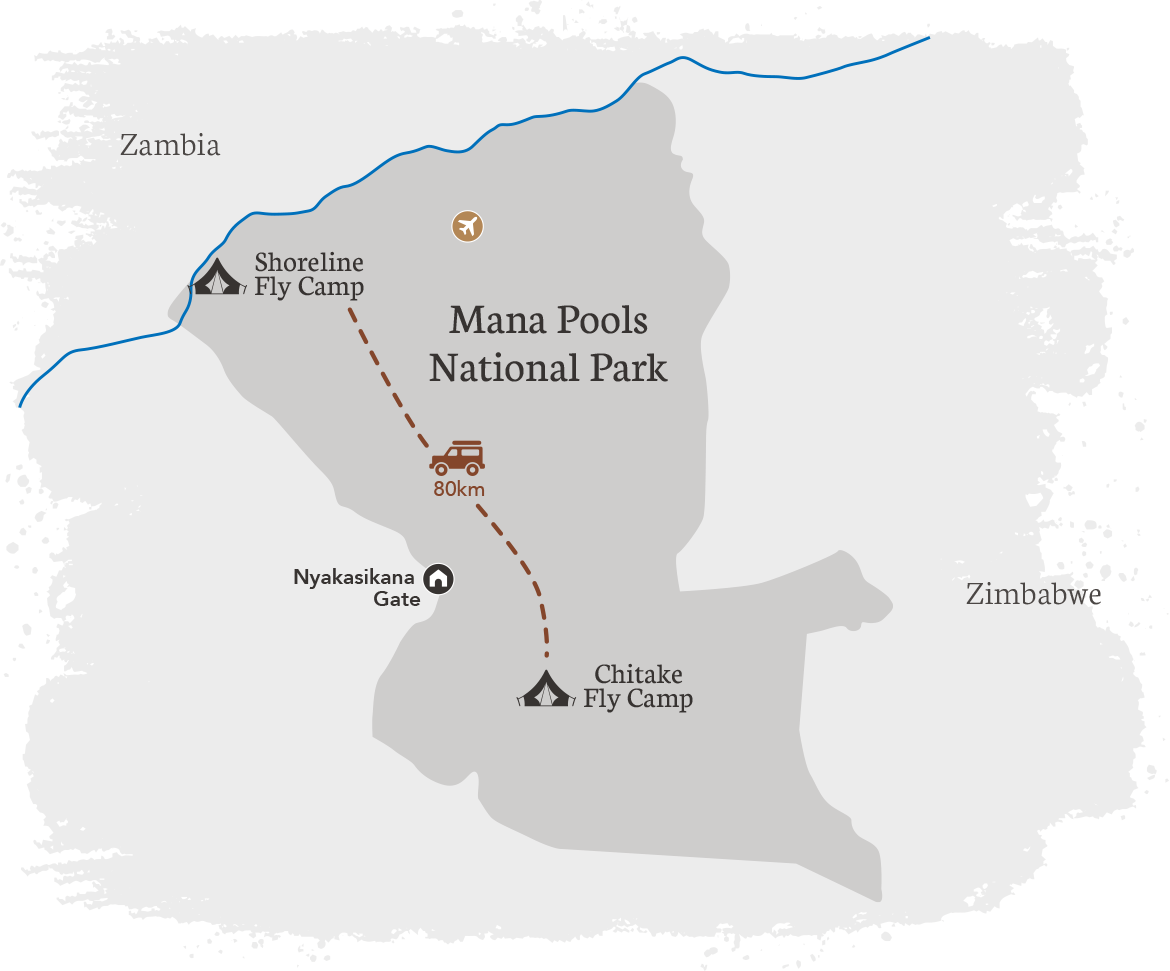
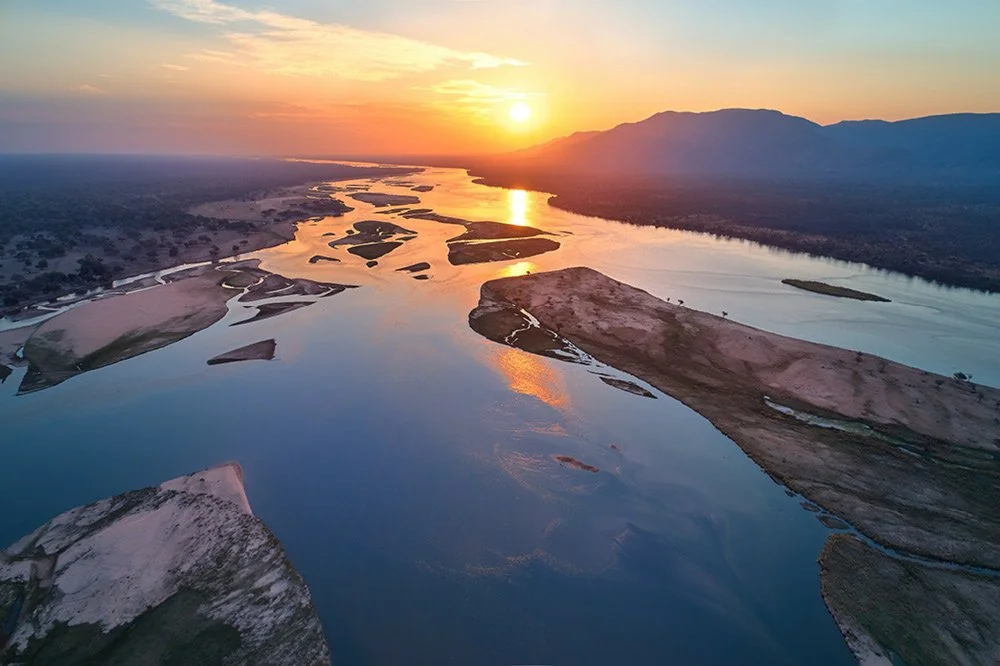
Mana Pools National Park is a landscape defined by contrast. Along the northern Zambezi shoreline, wide floodplains and riverine forests support high wildlife densities and excellent visibility. Further south, Chitake Springs offers a more rugged environment, where a permanent spring in an otherwise dry landscape draws wildlife in from far afield.
Together, these two areas reveal very different sides of Mana Pools – from open, river-shaped landscapes to intense dry-season wildlife concentrations centred on water.
Walking is central to the Mana Pools experience. Kaz did his safari guide training in the Mana Pools area, and his intimate knowledge of the landscape brings tracking wildlife on foot to life as you walk and learn about what's unfolding around you.
Mana Pools is also one of the strongest areas in Africa for painted wild dogs. While sightings are never guaranteed, the park offers consistently good opportunities to encounter these endangered predators, particularly across the floodplains where their movements are easier to follow.


Highlights of Mana Pools
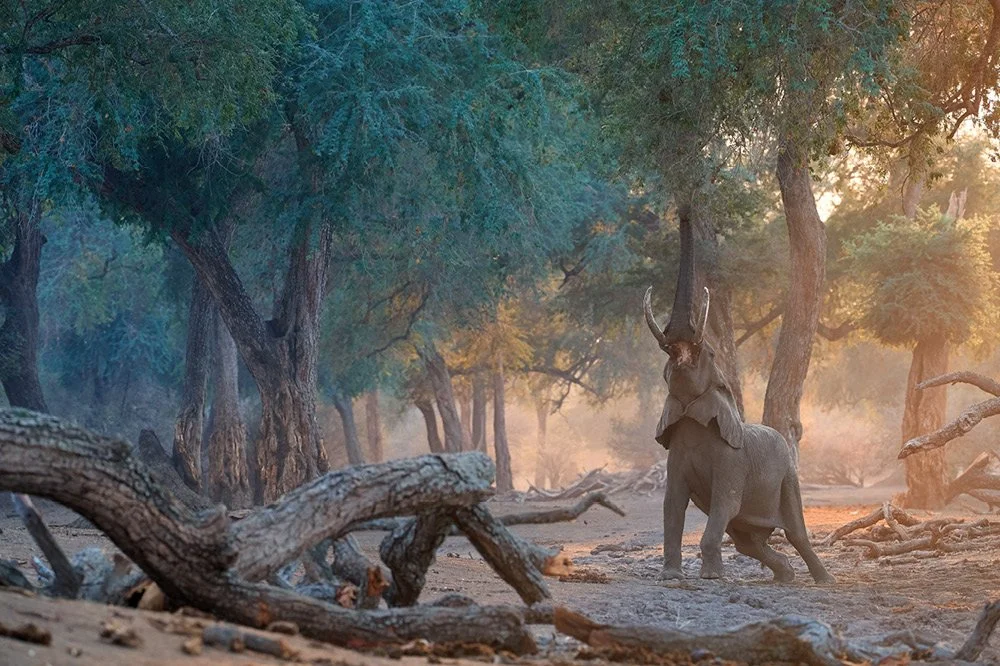
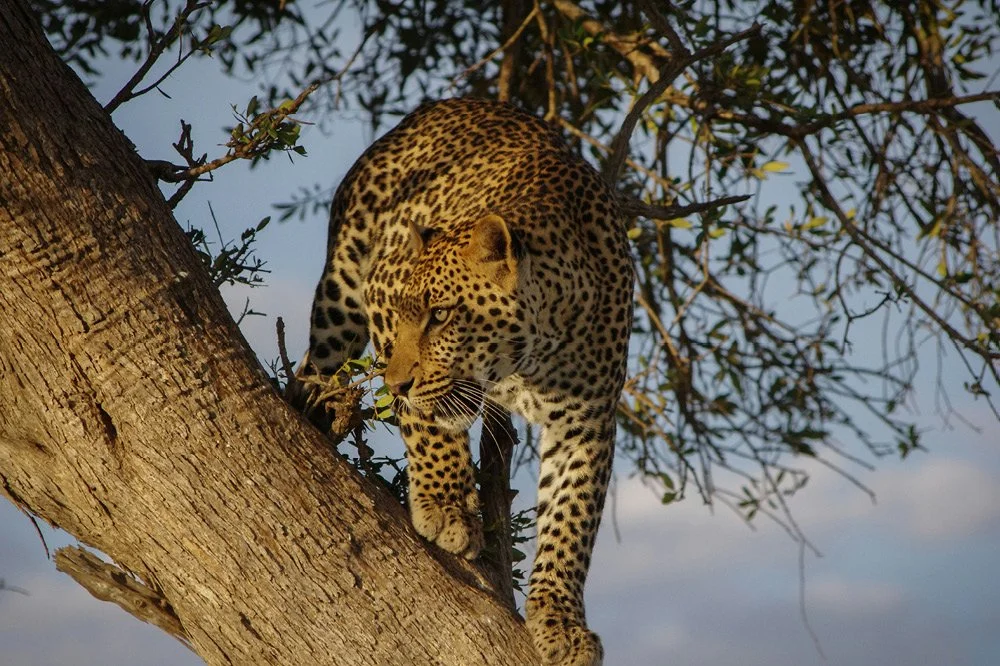
The Zambezi floodplains offer excellent walking safari conditions with frequent sightings of painted wild dogs, elephants, buffalo, and leopards.
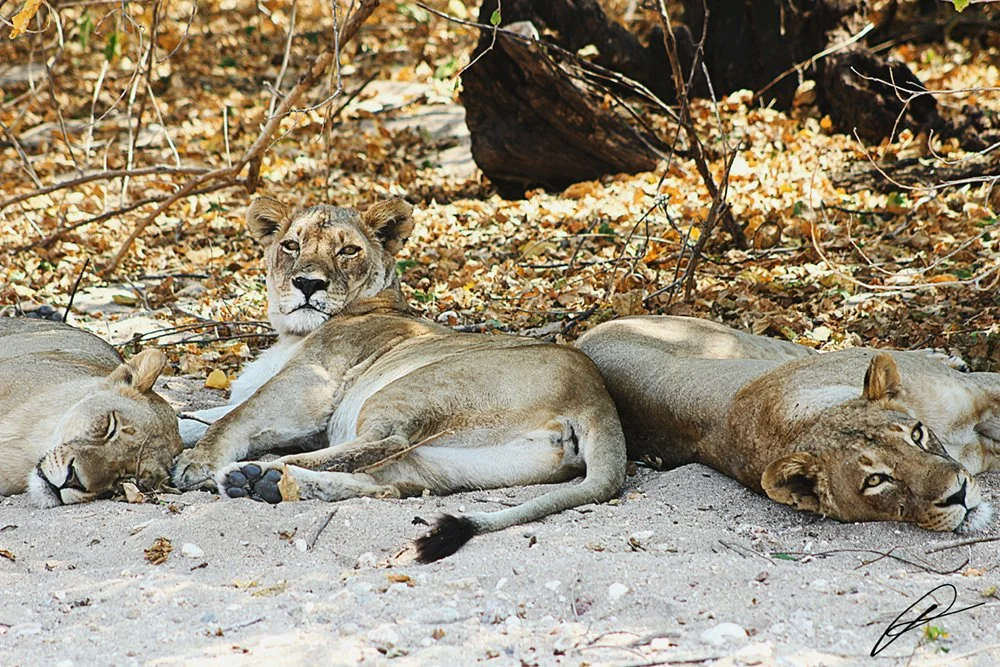
Chitake Springs provides a more concentrated dry-season experience, where wildlife gathers around a single permanent water source, often attracting lions, buffalo, elephants, and hyena.
The opportunity to experience two distinct Mana Pools ecosystems within one safari: river-driven abundance in the north and raw, water-dependent wilderness in the south.
Strong birdlife throughout, from riverine species such as African fish eagles, carmine bee-eaters, and kingfishers along the Zambezi, to dry-country birds including raptors, guineafowl, and hornbills around Chitake.
A safari style focused on walking, observation, and time spent understanding animal behaviour and movement.
Your Stay in Mana Pools
MANA POOLS FLY CAMPS
Our Mana Pools Fly Camps can be set up in both the north shoreline areas of the Zambezi River and at Chitake Springs, allowing flexibility based on season, wildlife movement, and guest preference.
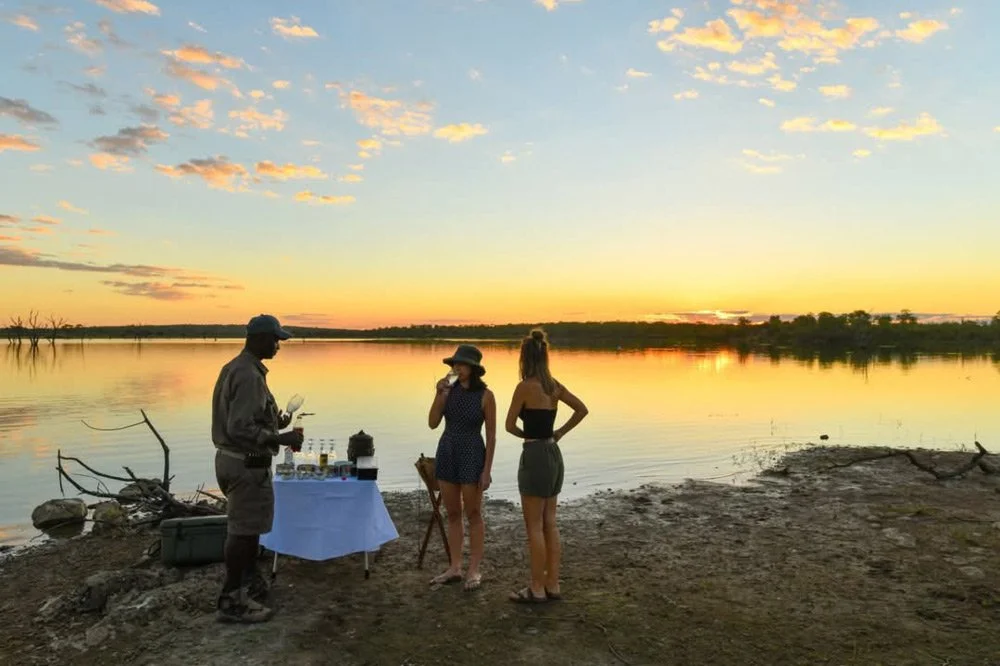
Camps are simple, comfortable, and low-impact, offering an immersive under-canvas stay in the heart of the park. Days are relaxed and responsive to conditions on the ground. Meals are enjoyed outdoors, with the focus firmly on time spent in the bush.
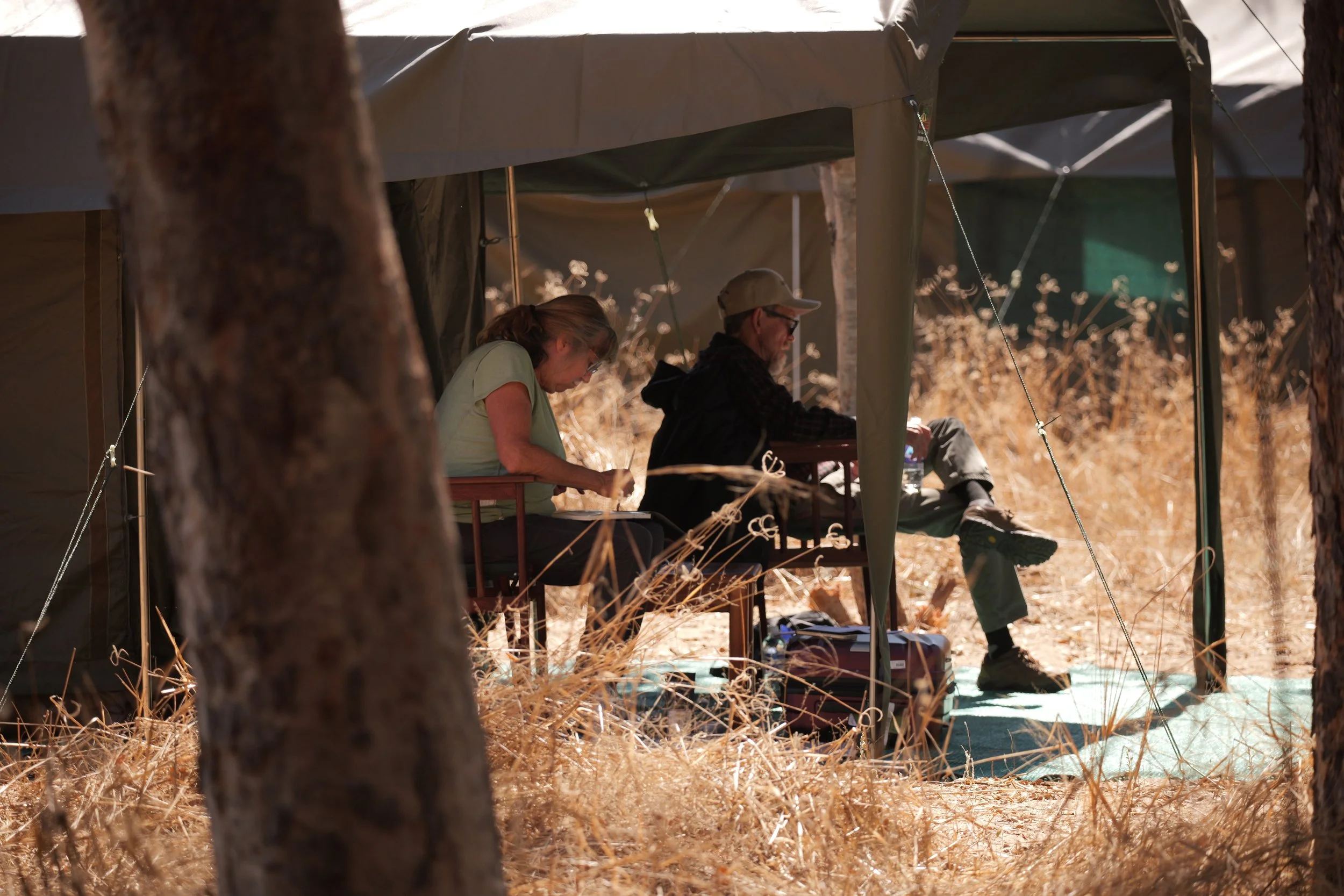
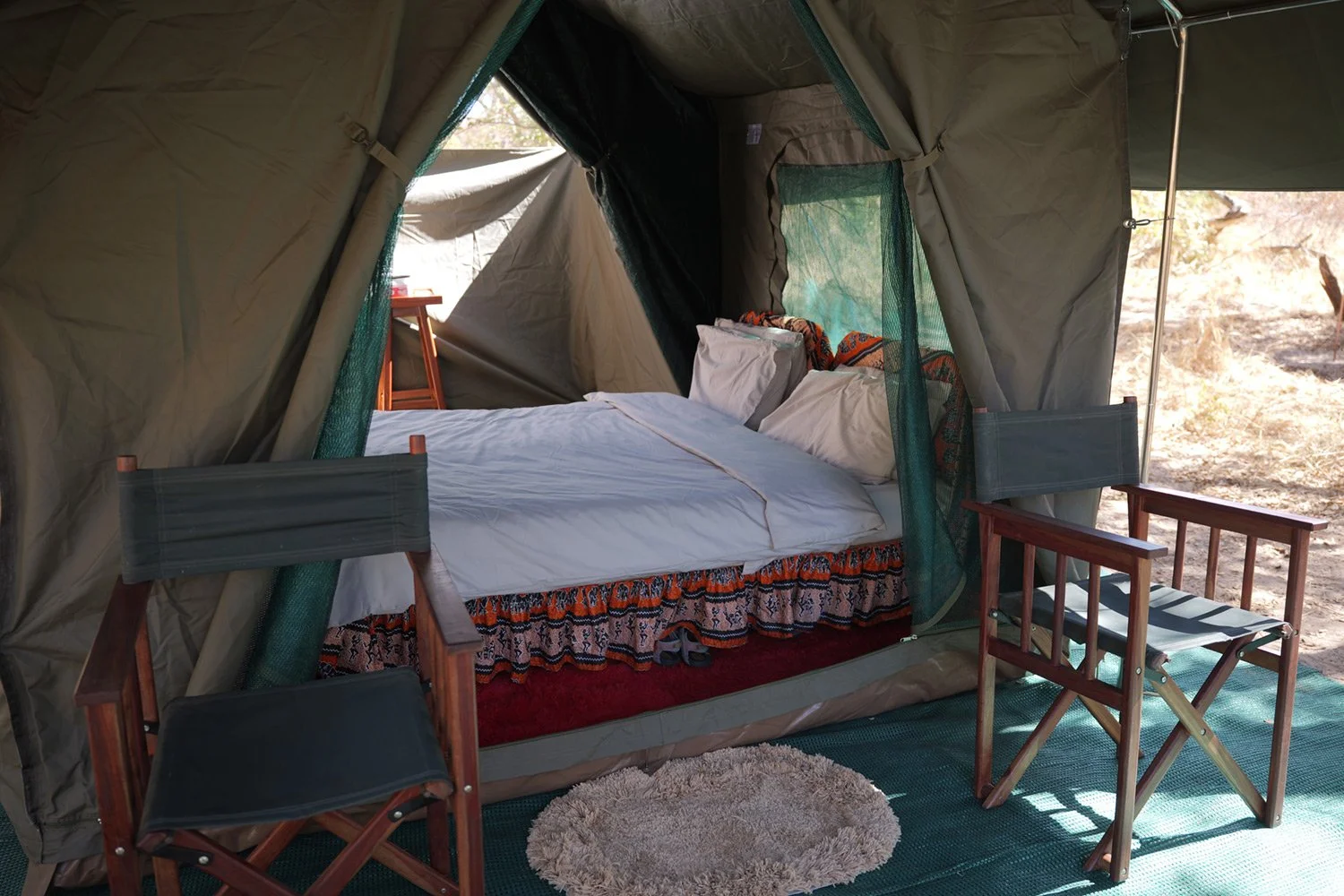
“Each fly tent includes twin or double beds, a private al-fresco ensuite bathroom, solar lighting, a camera-charging station, and a fly-sheet verandah with seating. Starlink Wi-Fi is available for essential communication.”
Guests may choose:
A Fly Camp stay of 3–5 nights, either along the Zambezi floodplains or at Chitake Springs
Or a 6-night, two-camp Mana Pools circuit, combining both regions
Mana Pools Fly Camps can also be combined with Fly Camps in Hwange National Park (Robins + Kennedy) as part of a longer Zimbabwe itinerary.
Minimum Stay: 3 nights
Rate: USD 375 per person per night
Bookings Requirements for Mana Pools: Group bookings only – Minimum 4 guests | Maximum 10 guests



Get in touch to find out more
SOUND LIKE YOUR KIND OF SAFARI?